








Most “best agentic AI” comparisons rank platforms by the number of features they list. That's the wrong test. A demo can show an agent answering a question, but production success depends on what happens next: whether the request is resolved, whether an exception reaches the right person with its context intact, and whether the organization can govern and measure the work.
This roundup compares seven enterprise platforms by their fit with the systems and teams that need to use them. It covers customer experience platforms, agent capabilities embedded in CRM and IT service management, and developer infrastructure for building custom agents. The McKinsey 2025 global survey, which surveyed 1,993 respondents, found that 62% of organizations were at least experimenting with AI agents, but only 23% reported scaling an agentic AI system in at least one business function. The gap between pilots and dependable operations is the key buying challenge.
Table of Contents
- 1. Yellow.ai
- 2. NiCE Cognigy.AI
- 3. Google Cloud Customer Experience Agent Studio
- 4. Salesforce Agentforce
- 5. ServiceNow AI Agents
- 6. Zendesk AI Agents
- 7. Amazon Bedrock AgentCore
- How the seven leading agentic AI platforms compare on pricing model, scope, and ecosystem fit
- Match the Platform to the Work You Need Done
1. Yellow.ai
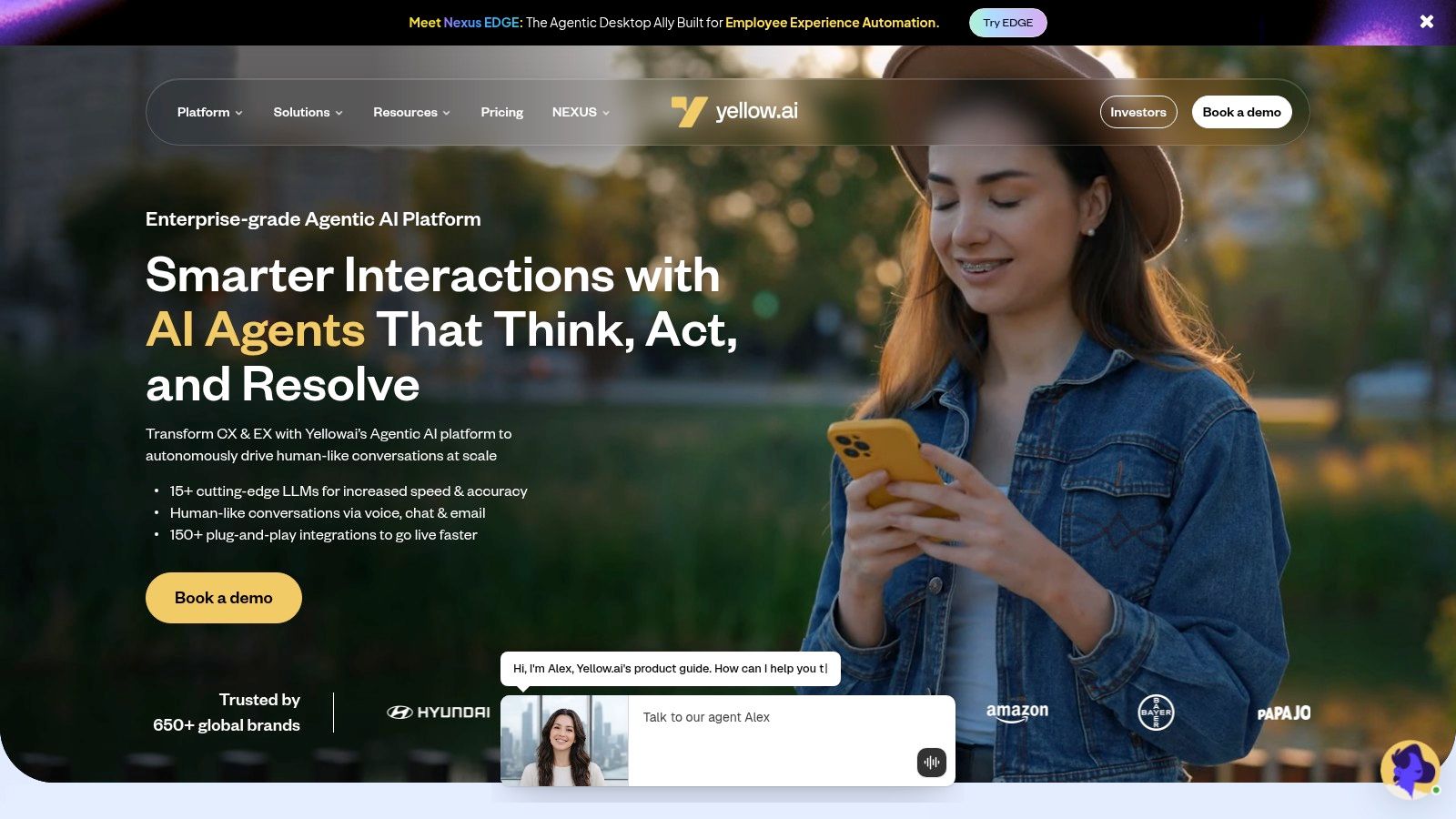
For CX and EX buyers who will be judged on resolutions after go-live, Yellow.ai fits when the work spans channels and systems. Agent Builder 2.0 creates agents with natural language prompts, and Agentic RAG grounds answers in enterprise knowledge. AI Copilot helps teams preview, debug and optimize performance, while Automated Testing and analytics track real conversational performance in one place.
Breadth is the reason to shortlist it. Voice AI agents interact in over 135 global languages, and agents handle chat, email, images, voice, documents and video with full context. The multi-model architecture uses 15+ LLMs, so teams can match models to tasks instead of standardizing on one provider. Prebuilt integrations include Salesforce, Zendesk, Genesys and Freshdesk, which shortens the path to actions like rescheduling a booking or running email intent workflows with escalation to the right team.
Where it fits, and what to test
Ask for current, relevant deployment references in your industry and channel mix before you commit. One homepage case study reports automating more than 70% of customer interactions after six weeks. Treat that as one example. Test your own containment, resolution rate, and handoff quality.
I recommend it for large CX and EX organizations that need cross-channel automation, model flexibility and governance in one operating model. Expect real implementation work. Workflow design, permission boundaries, testing and ownership still decide whether broad coverage turns into completed work or stalled pilots. Nexus EDGE, its desktop assistant, requires human approval on every action.
Practical rule: Measure completed resolutions and the quality of escalations, not just how many conversations the agent keeps away from a person.
Best for: Large CX and EX organizations that need cross-channel automation, model flexibility, and governance in one platform. Avoid if: You need transparent self-serve enterprise pricing or a narrow, simple bot that does not justify a broader platform rollout. Yellow.ai does not publish enterprise pricing, the Yellow.ai platform directs prospective enterprise customers to its sales process.
2. NiCE Cognigy.AI
Contact centers that need agents to work alongside existing voice and digital service operations should consider NiCE Cognigy.AI. It combines LLM reasoning with controlled workflow steps, which is useful when a service interaction needs conversational flexibility but still has to follow business rules. An agent can gather details, consult approved knowledge, and hand the case to a human without forcing the customer to repeat the whole story.
The platform also includes evaluation, analytics, and centralized AI operations. Buyers can choose among model providers, and Cognigy lists support for more than 100 languages and over 110 prebuilt tools and integrations on its Cognigy.AI product page. Those capabilities make it a plausible fit for large contact centers with varied channels and established CCaaS environments.
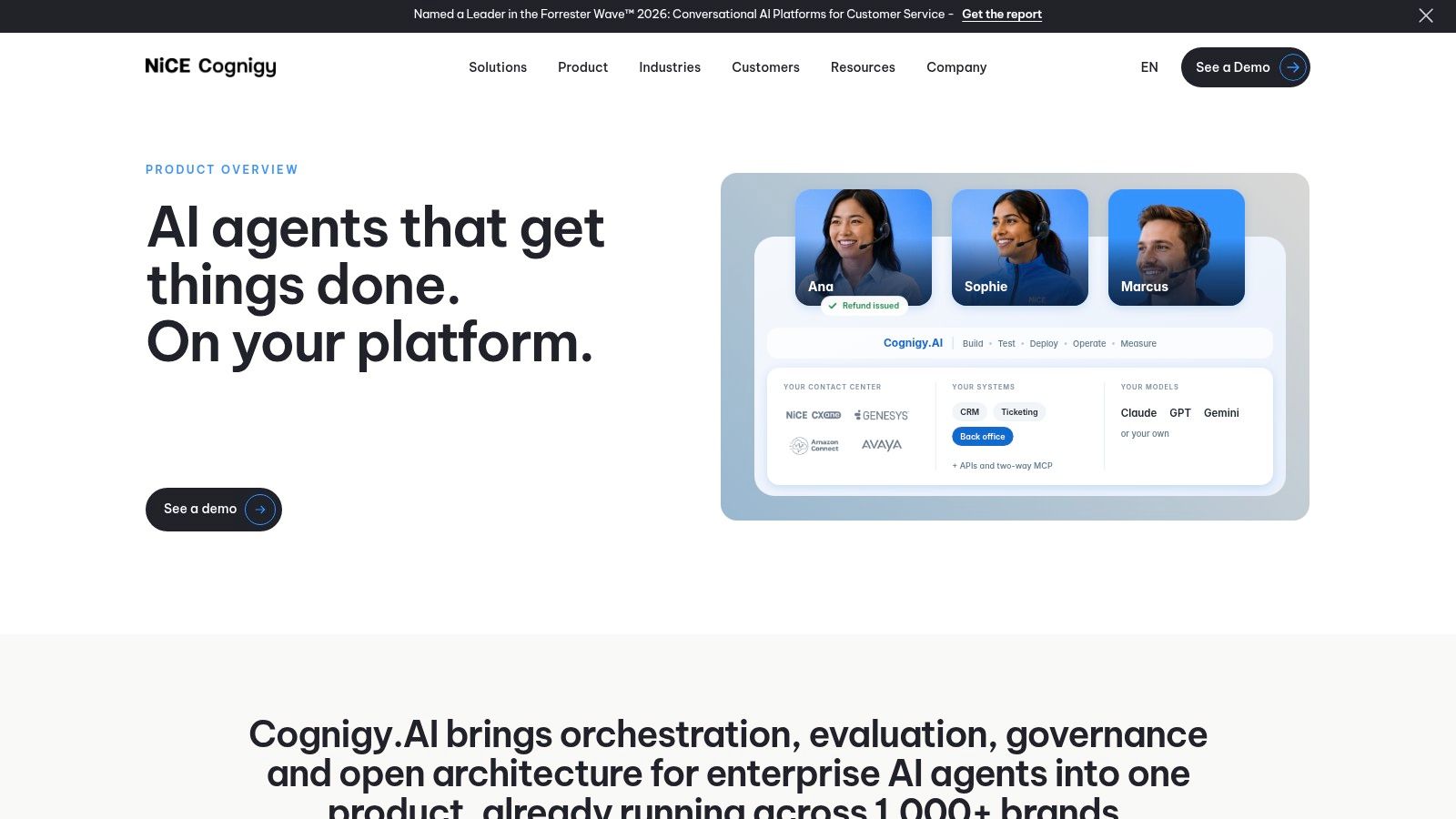
The trade-off is operational complexity. Integration depth and performance depend on the contact-center setup, and a platform designed for enterprise-scale service may be more than a smaller support team needs. Pricing is handled through sales, so compare the full implementation and operating model, not only the software proposal.
Best for: Contact-center leaders who need voice and digital automation with explicit workflows and human handoff. Avoid if: Your service operation is small, your workflows are straightforward, or you don't have the resources to validate integrations and manage a broad platform.
3. Google Cloud Customer Experience Agent Studio
Google Cloud Customer Experience Agent Studio suits teams building customer self-service on Google Cloud or adding Google customer-experience capabilities to an existing contact-center environment. Its visual builder, simulator, evaluation tools, and tracing bring testing closer to the build process. That matters because a plausible answer in a demo doesn't prove the agent can use tools correctly or recover when a workflow fails.
The platform supports text, voice, and image-based interactions, along with channels such as web, mobile, email, and social. Google also describes templates, backend connectors, MCP support, and integrations with CCaaS partners on its Customer Experience Agent Studio page. Published session pricing gives buyers a starting point for estimating spend, but total cost still depends on volume, session definitions, limits, and other applicable charges.
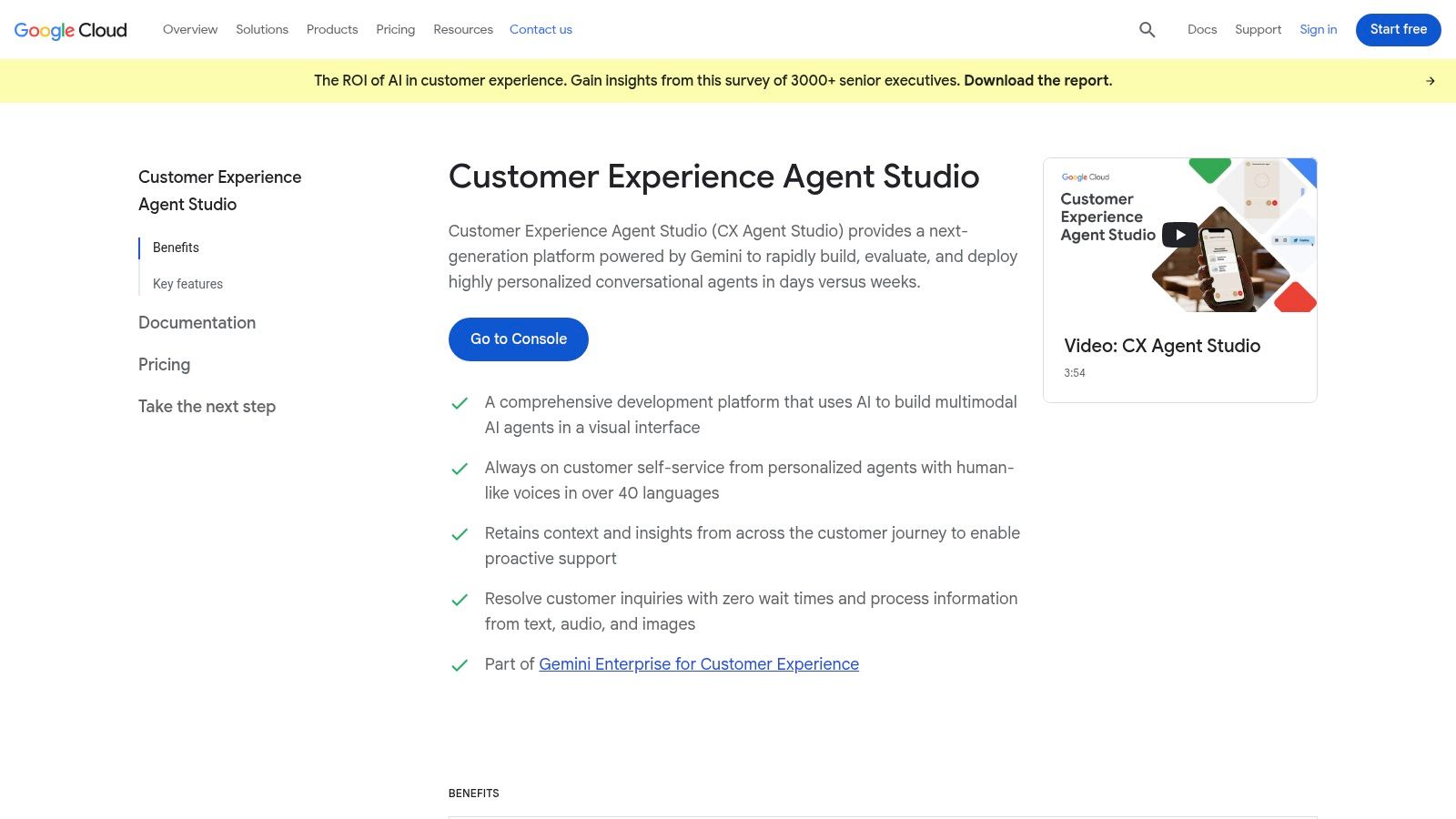
The platform's practical advantage is the development loop: teams can build, simulate, evaluate, and trace agent behavior instead of treating launch as the end of testing. Its trade-off is ecosystem fit. Organizations centered on another cloud should compare integration effort and operational ownership before choosing it solely for the builder.
For a broader view of the build-tool options, see this guide to AI agent builders.
Best for: CX teams already invested in Google Cloud that want to build and evaluate multimodal agents. Avoid if: Your cloud and contact-center architecture are elsewhere, or your planned channels and language needs haven't been confirmed against the product's current capabilities.
4. Salesforce Agentforce
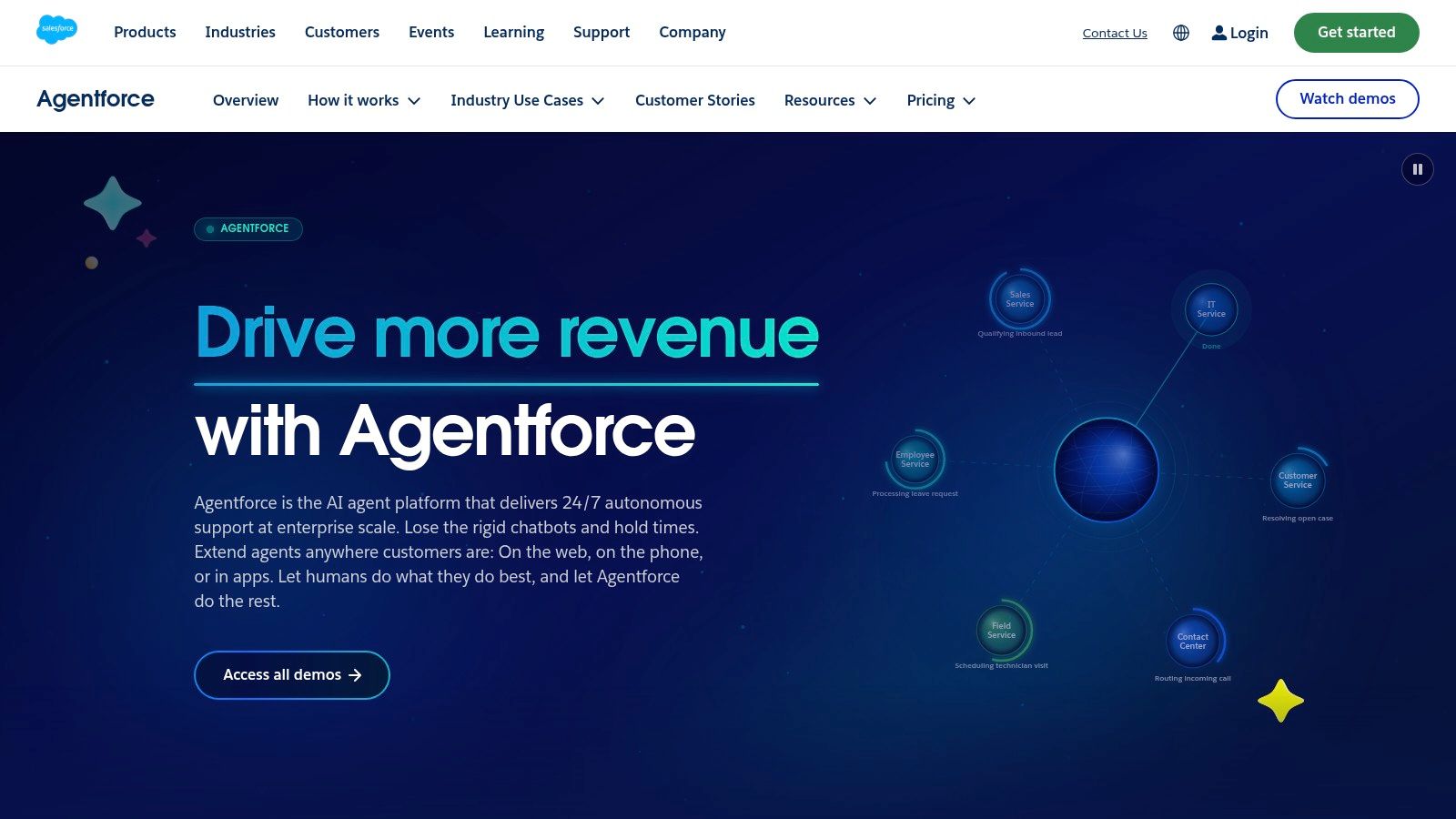
Salesforce Agentforce is a natural first platform to test when customer and employee workflows already depend on Salesforce records, service processes, and permissions. Agents can draw on CRM context and take actions through Salesforce workflows, reducing the distance between a conversation and the system where the work needs to be completed.
The platform supports customer- and employee-facing use cases, including voice. Salesforce offers consumption-based options and advertises a free Foundations entry point for trying agent-building capabilities on its Agentforce page. That gives existing customers more than one way to evaluate the platform, but it doesn't remove the need to model costs against real interactions and agent actions.
A useful pilot should follow a process all the way through: retrieve the right record, apply the correct rule, take an authorized action, and leave a trace that a service manager can review. Confirm which capabilities require extra licensing, credits, or a specific Salesforce edition before estimating the full cost. Native CRM context is an advantage, but it doesn't make workflow design or oversight unnecessary.
Best for: Organizations that already run customer service or employee processes in Salesforce and want agents to act within those processes. Avoid if: Salesforce isn't central to your operating environment, or you need a platform that's independent of a particular CRM estate.
5. ServiceNow AI Agents
ServiceNow AI Agents are designed to complete work inside ServiceNow's workflow environment, making them a strong option for organizations that already use the platform for IT, HR, or customer service operations. AI Agent Studio supports creating and customizing agents with natural-language instructions, while AI Agent Orchestrator coordinates agents across multi-step workflows. AI Agent Fabric connects and governs third-party agents and tools, and AI Control Tower provides centralized oversight.
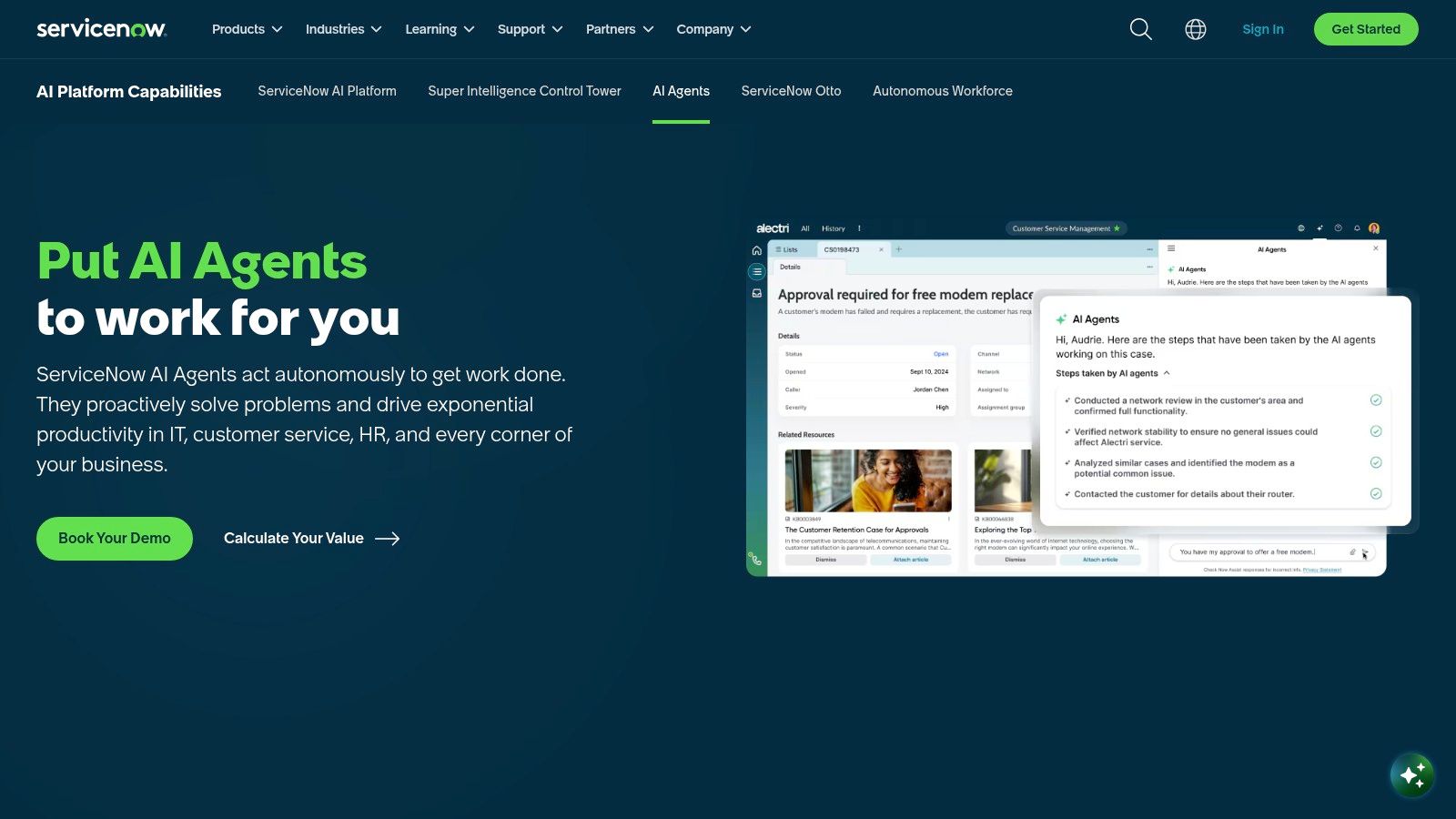
The distinguishing question is whether you need an agent to complete a process or answer a question. If the workflow involves updating a record, triggering a task, and coordinating follow-up, the platform's connections to enterprise processes may matter more than a polished conversational surface. Its AI Agents overview also describes support for voice, web, and desktop agents.
The trade-off is ecosystem dependence. If key workflows don't live in ServiceNow, assess the integration work and platform dependencies before committing. Pricing isn't presented as a simple public list, and a broad workflow platform can require more planning than a focused customer-service product.
For CX teams weighing dedicated service automation against workflow-platform approaches, this overview of incident management software provides additional context.
Best for: ServiceNow customers who want agents to take action across established IT, HR, and customer-service workflows. Avoid if: Your operational processes sit elsewhere and you need a lightweight, standalone CX agent.
6. Zendesk AI Agents
Zendesk AI Agents focus on customer-service requests across messaging, email, and voice. They can use knowledge and authorized system actions to work through requests, then pass a case to a human with conversation context when they can't complete it. That puts the evaluation on a useful operational measure: did the customer get a resolution, or did the interaction merely move between queues?
The product includes automated quality checks and analytics, and usage is measured through automated resolutions. Zendesk's AI Agents page describes the resolution-based model and available plan allowances. Before forecasting spend, map your real request mix, including cases that need multiple steps, cases that escalate, and the difference between an answer and a completed action.
The product's service focus can make it easier to start with knowledge-based resolution and expand into authorized workflows. But resolution-based pricing can be difficult to predict without realistic volume estimates, and channel and integration coverage must match your existing environment. Buyers moving from older Zendesk bot offerings should confirm current packaging and migration details rather than assume the previous plan carries over.
Teams already using Zendesk can also review the available Zendesk integration options when planning how an agent will connect to service operations.
Best for: Zendesk service teams that want to measure automation by completed resolutions and retain contextual human escalation. Avoid if: Your support stack is elsewhere, or you can't define and forecast the resolution volumes that drive cost.
7. Amazon Bedrock AgentCore
AgentCore belongs in the engineering buyer group. It provides runtime, memory, identity, tool gateways, browser actions, code interpretation, and observability as separate services you assemble. That structure suits teams that already build with LangGraph, CrewAI, LlamaIndex, or the OpenAI Agents SDK and want to choose models from AWS and other providers.
Go-live is where the trade-off shows. Resolutions do not come prebuilt. Your team defines the workflows, connects systems, sets permissions for each tool call, and builds recovery paths when a step fails. For grounding that requires fresh external data, teams often extract web content with Context to feed retrieval before the agent acts. Logging helps, but useful dashboards, alert thresholds, and rollback behavior still require design work.
The Amazon Bedrock AgentCore page describes consumption-based services without upfront commitment or minimum fee. Model that carefully. Browser sessions, memory writes, and interpreter time add up fast under noisy traffic. Start with one narrow workflow, cap tool scope, and prove clean handoffs and audit trails before expanding.
Best for: Engineering organizations that need modular control over custom agent architecture. Avoid if: You need turnkey CX automation, or you lack staff to own integration, safety checks, and ongoing maintenance.
How the seven leading agentic AI platforms compare on pricing model, scope, and ecosystem fit
| Item | Best For | Pricing Model | Channels or Scope | Ecosystem Fit |
|---|---|---|---|---|
| Yellow.ai | Enterprise customer and employee experience automation | Quote-based; contact sales | Voice, chat, email, and other channels | 150+ integrations; multi-LLM platform |
| NiCE Cognigy.AI | Enterprise contact-center automation | Quote-based; contact sales | Voice and digital channels; 100+ languages | Contact centers and existing CCaaS systems |
| Google Cloud Customer Experience Agent Studio | Building customer-service agents on Google Cloud | Published session pricing; other charges may apply | Text, voice, images, web, mobile, email, social, and apps | Google Cloud and CCaaS partners |
| Salesforce Agentforce | Agents for Salesforce-centric customer and employee workflows | Consumption-based; free Foundations option | CRM and service workflows; customer, employee, and voice use cases | Salesforce CRM and platform |
| ServiceNow AI Agents | Automating enterprise workflows across business functions | Contact ServiceNow; public pricing not listed | IT, customer service, HR, voice, web, and desktop | ServiceNow workflows and connected agents |
| Zendesk AI Agents | Customer-service request resolution | Usage-based per automated resolution | Messaging, email, and voice | Zendesk service environment |
| Amazon Bedrock AgentCore | Developers building and operating custom agents | Consumption-based, modular services | Agent infrastructure, tools, memory, and runtime | AWS, multiple frameworks, and model providers |
Match the Platform to the Work You Need Done
Start with the operating model, not the feature list. If your business handles high contact-center volume, shortlist platforms that can show a completed resolution, preserve context when a person takes over, and give service leaders a way to inspect performance. For CRM- or ITSM-led operations, test the agent platform native to your existing system first. A native connection can reduce friction, but it still needs to prove that it can perform the full workflow within your permissions and policies.
Engineering teams face a different choice. A developer platform offers control over frameworks, models, and runtime components, but your team must also design the experience, integrations, and operational safeguards. Estimate the cost of the entire workflow, including model and service usage, testing, oversight, and exceptions. A low-cost prototype can become an expensive production system if teams don't measure what each completed action requires.
The broader market evidence argues against scaling on a demo alone. Gartner's forecast on agentic AI projects says more than 40% could be canceled by the end of 2027 because of rising costs, unclear business value, or inadequate risk controls. That makes testing, auditability, human approval, and a clear business case practical selection requirements, not optional extras.
Run a pilot on your highest-volume request types, chosen because they have clear outcomes and manageable exceptions. Track completed resolutions, escalation quality, rework, and cost to operate, then compare results against your current process. Keep approval requirements for actions with meaningful customer, financial, or compliance consequences until the agent has shown it can handle the workflow reliably. Choose the platform that performs best in your environment, not the one with the most impressive demo.
Yellow.ai offers an enterprise agentic AI platform for building, testing, and optimizing agents across customer and employee experiences, with multiple models, channels, and integrations. If you're comparing platforms based on resolutions, clean handoffs, and governance after go-live, explore what Yellow.ai can support at Yellow.ai.