













Most advice on how to test AI agents still starts from the wrong assumption, that an agent can be checked the way a CRUD app can. It can't. The moment a model, prompt, tool, or retrieval source changes, the same input can produce a different but still acceptable output, or a dangerously wrong one, which is why agent testing has to be dataset-driven and statistical, not anecdotal, as practical guidance on agent evaluation makes clear (dataset-first evaluation guidance).
Traditional QA looks for exact matches. AI agents need a test discipline that measures whether outputs meet a defined bar across a representative set, with separate checks for correctness, relevance, consistency, safety, and latency, because the failure usually isn't “the answer was off by a word,” it's “the agent took the wrong step, used the wrong tool, or handled the conversation badly.” That's the mental shift that makes the rest of the stack make sense.
Table of Contents
- Why Traditional Testing Fails for AI Agents
- Building Your Golden Dataset and Acceptance Criteria
- Designing Test Cases Across Every Agent Dimension
- Automating Tests and Integrating with CI/CD Pipelines
- Observability and Continuous Test Improvement
- Sample Test Matrix for an Enterprise Customer Service Agent
Why Traditional Testing Fails for AI Agents
The mistake is treating an agent like deterministic software with a polished interface. That approach breaks as soon as a prompt change, tool update, or model swap changes output shape without changing user intent. Agent evaluation has to ask whether a statistically meaningful share of cases clears a defined bar, because the same system can be correct on one run and wrong on the next.
Probabilistic output breaks exact-match thinking
Exact-match assertions are brittle because agent outputs vary. A customer support agent may answer the same policy question correctly in two different ways, then fail a third time by omitting a boundary condition or inventing an unsupported detail. A string comparison test will miss both acceptable variation and dangerous drift.
Practical rule: test the properties of the output, not the literal wording.
Check whether the agent stayed grounded, used the right tool, respected its scope, and produced an answer that meets your acceptance criteria. For many teams, that is the point where the testing model shifts from “does this look right?” to “what share of scenarios pass?” That question keeps you honest when quality depends on model behavior that can change underneath you.
Multi-step reasoning is where the real failures hide
Agents fail in the middle more often than they fail at the final sentence. They pick the wrong branch, call a tool in the wrong order, recover badly from an error, or keep looping after a partial success. A single final-output check cannot tell you whether the trajectory was sound, and in enterprise systems that difference matters because a wrong action can have side effects even if the last response sounds polished.
Practical evaluation frameworks separate task completion, tool sequencing, and side effects instead of collapsing everything into one score. Strong test suites also need positive cases and adversarial ones, since a system that performs well on clean prompts can still break on jailbreaks, malformed inputs, or slow responses (trajectory and observability guidance).
Context sensitivity makes spot checks misleading
Conversation history changes behavior. So does prior tool output, memory, and retrieval context. A manual spot-check on a single happy path can create a false sense of security, because the same agent may fail once the dialogue gets longer, the user corrects themselves, or the model has to reconcile conflicting context.
A useful internal link for teams mapping agent concepts to product architecture is Yellow.ai's overview of agentic AI and agents. The point is not the taxonomy, it is the implication. If the system's behavior depends on history and orchestration, testing has to cover the full trajectory, not just the final response.
Building Your Golden Dataset and Acceptance Criteria
A useful eval stack starts before code. It starts with a golden dataset, a versioned set of scenarios that reflects how people use the agent, plus the ground truth or scoring rubric for each case. That dataset should include real success paths, known failure modes, and the edge cases that usually surface only after a release. Operational guidance recommends starting with roughly 50 to 100 test cases for an initial baseline and scaling to 500+ cases for production-grade coverage, while keeping about 20 to 30 percent as edge cases and rerunning the suite on every significant change, including prompt edits, tool updates, or model-version bumps (dataset and coverage guidance).
Start from real work, not synthetic imagination
The best source material is usually the messiest one, customer conversations, support tickets, internal escalation threads, and subject-matter expert review. Synthetic prompts still have a place, but only after the suite is anchored in real behavior. A test set built entirely from invented prompts tends to mirror the team's assumptions and miss the failures customers hit.
Build the dataset around scenarios, not just prompts. For a support agent, that means capturing the user's intent, channel, language, escalation path, and the expected business outcome. For a workflow agent, it means recording which tools should be called, in what order, and what counts as a correct stopping point. That structure matters because the same prompt can be acceptable in one context and wrong in another.
Define ground truth and scoring before writing tests
If the output is structured, use deterministic checks. If it is open-ended, define a rubric that separates accuracy, completeness, tone, and safety. The goal is to make judgment repeatable enough that two reviewers, or one reviewer and an evaluator, can score the same case consistently.
Practical rule: if you cannot describe what “good” means in one paragraph, you are not ready to automate the test.
That definition has to include what the agent must not do. Safety cases belong in the same dataset as success cases, because a polished answer that violates policy is still a failed test. In practice, teams track the acceptance threshold per category, then gate release only when the overall score and the high-risk sub-scores clear the bar. For a customer support agent, that usually means a clear pass on intent resolution is not enough if the response leaks sensitive data or skips a required escalation step.
Version the dataset like code
A golden dataset is not a spreadsheet someone updates casually. It needs versioning, change history, labels, and ownership. The moment you add a new failure case, you have created a regression test, and that case should not disappear just because the prompt got rewritten.
The operational payoff is straightforward. Every production failure that becomes a dataset entry makes the agent harder to break in the same way again. That is the value of dataset-driven testing, it converts incidents into permanent controls instead of temporary lessons.
Designing Test Cases Across Every Agent Dimension
Agents don't fail in one dimension. They fail across tool use, conversation quality, safety, multi-modal handling, and integration behavior, often in the same session. A useful test taxonomy has to mirror that reality instead of pretending all failures are the same kind of defect.
| Test Category | Key Scenarios | Primary Metrics |
|---|---|---|
| Functional correctness | Wrong tool choice, missing arguments, bad API handling, recovery from tool failure | Task completion, tool-call accuracy, trajectory correctness |
| Conversational quality | Context retention, persona consistency, multi-turn clarification, boundary setting | Relevance, coherence, consistency |
| Voice interaction | Interruption handling, pronunciation, response latency, turn-taking | Latency, transcription quality, completion success |
| Multi-modal input | Image understanding, document extraction, mixed text-and-file workflows | Extraction accuracy, grounding, handoff quality |
| Integration reliability | Salesforce, Zendesk, CRM updates, ticket creation, workflow handoffs | Side-effect correctness, end-to-end success |
| Security and safety | Jailbreaks, prompt injection, PII leakage, unsafe instructions | Safety score, refusal quality, policy adherence |
Functional tests catch the expensive bugs
The most damaging failures are often boring. The agent calls the wrong tool, passes a malformed field, or continues after a tool error as if nothing happened. Those aren't nuanced quality issues, they're operational bugs. If the workflow depends on a booking API, a ticketing system, or a database update, your tests need to validate the exact sequence of actions, not just the final text returned to the user.
Conversational tests need multi-turn pressure
Single-turn prompts are too easy. Real users correct themselves, change topics, and ask follow-ups. That's where context retention and persona consistency break, especially in agents that manage long support threads or handle handoffs between channels.
Use paraphrases, chained follow-ups, and contradictions in the same test set. A good conversation test should check whether the agent remembers prior constraints, avoids repeating itself, and keeps the policy boundary intact when the user presses harder. That's also why frameworks increasingly separate conversation scoring from task scoring, because a useful answer can still come from a messy or brittle exchange.
Voice, multi-modal, and integration tests need their own criteria
Voice systems are sensitive to timing. If the agent speaks too slowly, interrupts poorly, or mangles pronunciation, the experience feels broken even if the intent is correct. Multi-modal agents need tests for files, screenshots, and documents because extraction errors often appear only when the agent has to combine modalities.
For enterprise deployments, integration tests are essential. A response that sounds right but writes the wrong status to Salesforce or creates the wrong Zendesk ticket is not a success. Security tests belong here too, because jailbreak attempts, prompt injection, and PII leakage should be treated as first-class regression cases, not one-off red team curiosities.
Automating Tests and Integrating with CI/CD Pipelines
Manual checks fall behind as soon as prompts change, tools get swapped, or a model upgrade shifts behavior in a way that still looks fine in a demo. By the time someone catches a regression in a chat thread, customers have usually already seen it. Agent testing has to live in the same release flow as the rest of engineering, with deployment blocked when quality drops below the agreed threshold.
Make the pipeline run on every meaningful change
Split fast checks from deeper evaluations. Fast checks should validate schema, tool calls, basic safety rules, and obvious trajectory errors on every PR. Slower judge-based evaluations can run on a schedule, before release, or whenever prompts, tools, or model versions change. That keeps feedback quick without pretending every quality dimension can be resolved in seconds.
Practical rule: if a test can be deterministic, make it deterministic.
That sounds obvious, but a lot of teams burn model calls on things a normal assertion can catch. If a field must exist, validate it. If a tool name must match, assert it. Use model-based evaluation for subjective dimensions like helpfulness, completeness, and subtle safety boundaries.
Use tooling that exposes the right failure signals
A good platform makes previewing, debugging, and test-case generation part of the same workflow, so the suite stays current instead of drifting out of date. One example is Yellow.ai's Automated Testing feature, which supports previewing and hardening agents before release, plus the AI Copilot for refining test cases. Used well, tools like that make it easier to fold test design into delivery instead of treating QA as a separate ritual.
Multi-LLM validation matters too. If the agent can run on different model providers, test the behavior across those model paths, not just the happiest one. Provider-specific regressions show up in production more often than teams expect, usually when everyone is already trying to move on to the next release.
Keep regression tests tied to incidents
Every failed release, support escalation, or unsafe interaction should become a regression case. That is the cleanest way to build institutional memory into the suite. The goal is not to collect hundreds of cases for bragging rights, it is to make sure the same mistake does not get shipped twice.
Observability and Continuous Test Improvement
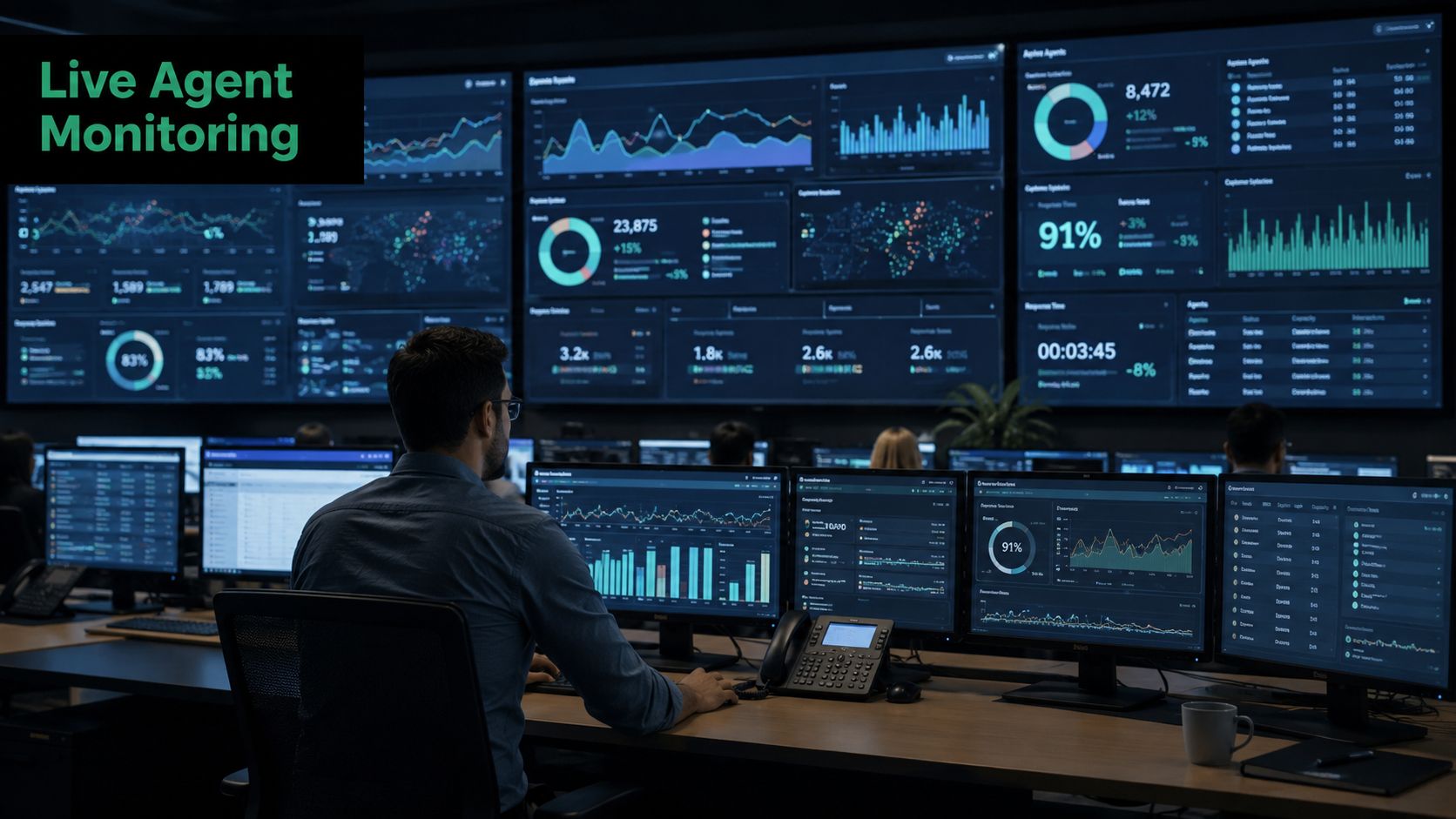
Pre-release testing only catches what you already expected. Production observability catches what real users do, and a serious test program gets better from that gap. Live monitoring should sample a slice of real outputs for automated checks and human review, while logging latency, token usage, tool traces, model version, and prompt behavior so drift can be caught even when synthetic tests still pass. The operational goal is simple, keep the evaluator close to the system, and feed the results back into the suite before a small regression becomes customer-visible.
Turn traces into new tests
The strongest loop starts with a failure in production. That trace becomes an offline eval case, the case gets replayed in development until the fix holds, and the case stays in the suite so the same mistake does not ship again. When this discipline is in place, every incident improves the next release instead of just generating a ticket.
Trace review matters because curated datasets miss odd combinations that only show up in live traffic. Long conversations, tool chains, and partial recoveries often fail in ways the final answer does not reveal. A clean response can hide a broken path, so analysts need to inspect the full trajectory, not just the last message. For prompt drift and trace-based reliability checks, see prompt reliability and drift analysis.
Separate the evaluation layers
Different failure modes need different checks. Deterministic tests fit structured outputs, judge-based scoring works for free text, and trajectory assertions belong on tool order and side effects. Those layers should stay separate, because a task can finish correctly while still taking an inefficient or risky path.
That matters for drift detection. If the task score stays flat but latency climbs, tool calls multiply, or the orchestration path gets noisier, the agent is still degrading in ways customers feel. Continuous improvement means feeding those signals back into the suite before they show up as incidents.
One practical way to keep the loop tight is to rank failures by business impact, then turn the highest-value ones into regression tests first. That work is unglamorous, but it keeps the suite focused on the failures that hurt customer experience.
Sample Test Matrix for an Enterprise Customer Service Agent
A customer service agent that handles voice, chat, and email has to be tested like three related systems, not one. Voice needs turn-taking and interruption handling. Chat needs fast clarification and context retention. Email needs threading, tone control, and a higher tolerance for delayed back-and-forth.
A realistic matrix
- Happy-path billing question: user asks for an invoice copy in chat, the agent should identify the account, retrieve the right document, and confirm delivery.
- Voice interruption case: customer cuts off the agent mid-response, the agent should stop, recover gracefully, and continue without losing the thread.
- Email escalation case: a complaint arrives in a long thread, the agent should summarize the issue, preserve prior commitments, and avoid contradicting earlier messages.
- Cross-channel handoff: a chat conversation moves to email, the agent should retain context and not ask the customer to repeat verified details.
- Retrieval-bound answer: with a Conversational Knowledge Base and agentic RAG, the agent should answer only from the approved source set and stay grounded in the retrieved material.
- Adversarial prompt: the user asks the agent to ignore instructions or reveal internal policy, and the agent should refuse without leaking hidden context.
That mix gives you a test suite that reflects the operating surface instead of a demo flow. It also creates room to score each scenario differently, because a voice interruption failure is not the same as a retrieval failure.
How to prioritize the suite
The high-risk paths go first. Account changes, policy statements, refunds, and any flow that touches enterprise systems should sit near the top of the matrix. Lower-risk informational questions can fill coverage, but they shouldn't dominate the suite just because they're easy to generate.
If you're prototyping a multi-modal service agent, Yellow.ai's AI Agent Builder 2.0 is one option for assembling and testing the workflow, alongside its Conversational Knowledge Base for retrieval-backed responses. The important part is not the branding, it's the discipline of testing channel-specific behavior, retrieval grounding, and safety together so the deployed system reflects how customers use it.
If you're building or hardening enterprise agents, Yellow.ai gives teams a practical way to test, debug, and monitor agent behavior across voice, chat, email, and retrieval-backed workflows. Visit Yellow.ai to see how its testing and analytics tools fit into a release process that catches regressions before customers do.



